High-voltage project Rilland–Moerdijk


| In collaboration with | Strukton Wegen & Beton, TenneT, abtWassenaar |
| Location | Rilland-Moerdijk |
| Expertises | |
From analysis to a robust design
abtWassenaar and ABT were faced with the challenge of delivering all foundation designs within a tight schedule. A traditional approach with individual, bespoke designs was not feasible. Therefore, we opted for an innovative strategy: standardisation, automation, and data‑driven engineering.
We began the project with a thorough analysis of pile performance issues encountered in previous TenneT projects. Based on real‑world data, we developed a more robust design incorporating larger piles and two standard foundation solutions: a single‑pile footing and a three‑pile footing. This standardisation formed the basis for automation. In doing so, we increase speed and reliability while minimising the risk of failure.
Data model as the backbone of the process
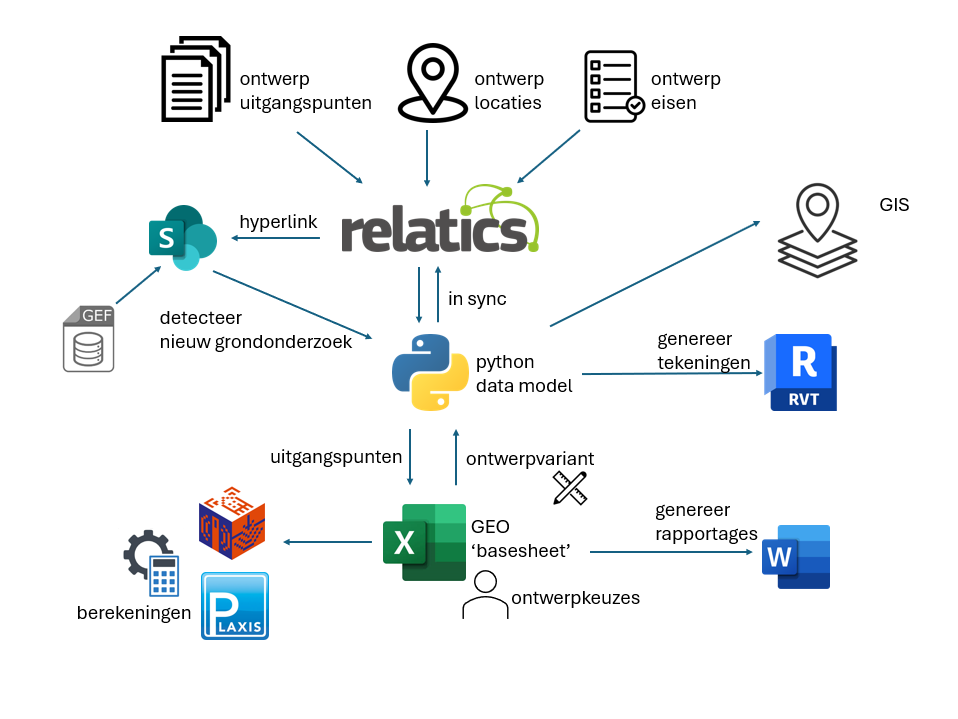
All design information, from line sections to CPT data and from tower bases to pile foundations, is embedded in an advanced data model in Relatics. This model ensures full traceability and links TenneT’s requirements to the design data. Scripts developed by Oosterhoff Digital provide automated data input, calculations, and feedback into the model.
From this central database, we generate 3D models and drawings, giving us complete control over the data flow. During the construction phase, as‑built information of the installed pile foundations is added. Based on this data, we generate the as‑built drawings.
Flexibility in case of deviations
The strength of this approach becomes evident in unexpected situations, such as deviations in pile performance during construction. By pre‑calculating scenarios and being able to adjust data instantly, we can respond extremely quickly without causing delays or compromising safety. For the municipality, it is immediately clear which permit modifications are required, the additional reinforcement has already been calculated, and it can be delivered to the site right away.
Collaboration as a key success factor
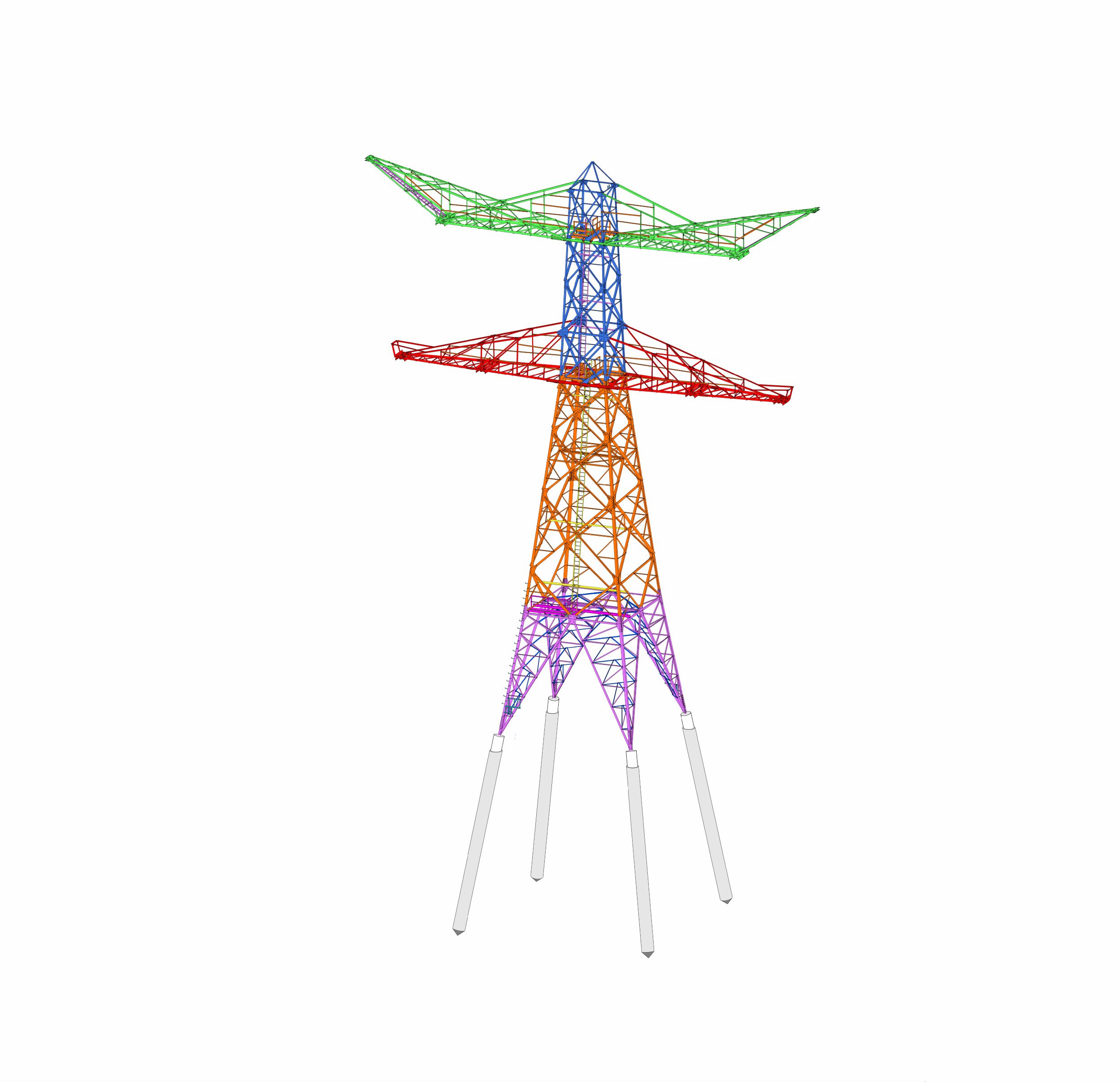
The project required close collaboration between geotechnical engineering, structural engineering, BIM and Oosterhoff Digital. These disciplines worked as interconnected links, with the data model as the central hub. This multidisciplinary approach, combined with the mutual trust between abtWassenaar and ABT, proved essential to achieving both speed and quality.
Results and future value
In November 2025, the first batch of 27 towers was completed. The investment in standardisation and automation is paying off in terms of speed, quality and reusability. The method can also be applied to other repetitive components within projects, such as sanitary units or meeting rooms.
Images © TenneT


